
Too Old for a Children's Method, Too Young for an Adult Method?
June 7, 2018|
E. L. Lancaster

Today’s students are more sophisticated than ever due to technology and social media. Our seven- and eight-year old students usually like typical beginning methods with colored art work and words to beginning pieces. When beginning students are nine-years and older, sometimes beginning methods appear to be too juvenile for them. At the same time, adult methods present too much information for them to successfully assimilate and move too quickly for technical and musical success. Since the release of Premier Piano Course , many teachers have said that their older students like the music, but they can sometimes move faster.
Premier Piano Express is a method for those students who can progress more quickly than younger students but need less information to absorb than is found in adult methods.
Book 1 includes all concepts introduced in Premier Piano Course, Levels 1A and 1B. Book 2 includes all concepts introduced in Levels 2A and 2B. The features of the “Express Course” follow:
- It is designed for students who need a faster-paced approach to piano study.
- It integrates Lesson, Theory, Technique, and Performance pages into each book.
- Like the regular course, it utilizes a non-position reading approach to avoid fixed hand positions and introduces rhythms in multiple-note patterns.
- Each book includes a CD+ with MIDI files, TNT2 Custom Mix Software, and MP3s of orchestrated accompaniments with piano, orchestrated accompaniments without piano, acoustic piano performances at practice tempos, and acoustic piano performances at performance tempos.
The TNT2 Custom Mix Software allows the user to change tempos in the audio files. In addition, the CD-ROM contains General MIDI files that can be downloaded. For students who do not have a CD-ROM drive, these files can be downloaded .
This comprehensive course is organized into skills-based units that feature clear explanations of important musical concepts, written worksheets to provide review and strengthen understanding, as well as optional duet accompaniments to create fulfilling musical experiences. The unit titles follow:
Book 1
- Unit 1: Keyboard Basics
- Unit 2: The Music Alphabet
- Unit 3: The Staff
- Unit 4: Steps in Bass Clef
- Unit 5: Steps in Treble Clef
- Unit 6: Skips on the Staff
- Unit 7: Legato and Staccato
- Unit 8: Intervals of 2nds and 3rds
- Unit 9: The G 5-Finger Pattern
- Unit 10: Intervals of 4ths and 5ths
- Unit 11: Sharps and Flats
Book 2
- Unit 1: The C 5-Finger Pattern
- Unit 2: Dynamics and Tempo
- Unit 3: Tonic and Dominant in C
- Unit 4: Eighth Notes
- Unit 5: Tonic and Dominant in G
- Unit 6: Half and Whole Steps
- Unit 7: Major 5-Finger Patterns
- Unit 8: Interval of a 6th
- Unit 9: New Notes on the Staff
- Unit 10: Minor 5-Finger Patterns
- Unit 11: Intervals of 7th and Octaves
- Unit 12: C and G Major Scales and Chords
- Unit 13: Dotted Quarter Note
The music in Premier Piano Express was written by Dennis Alexander and Martha Mier . To make the course more appealing to older students, the original art work has been removed and any juvenile words have also been eliminated from the music. The last three pieces in Book 1 illustrate the various styles featured in the course. They include two familiar arrangements and an original piece in a showstopper style. Click the image below to view a sample .
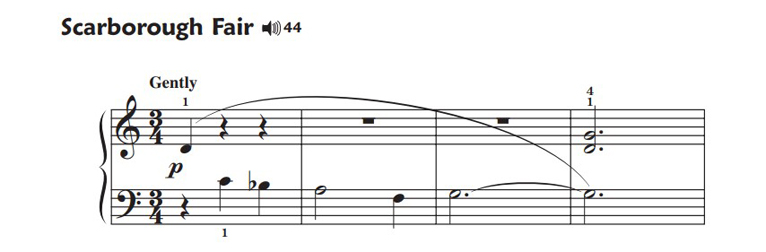
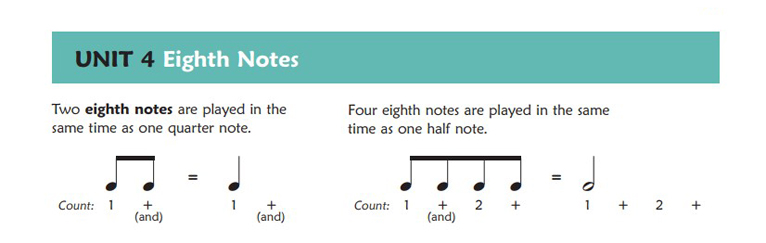
This accelerated approach includes method, theory, performance, and technique pages in each unit—giving students a comprehensive approach upon which to build musical understanding and performance skills. Pages 21–24 of Unit 4 from Book 2 illustrate pages that focus on these four important areas.
Choosing a method that appeals to each student is a teacher’s most important job when working with beginning students. In Professional Piano Teaching, Book 1 , Jeanine Jacobson lists important criteria to consider when selecting a method. She summarizes in three important points:
- The function of a method book is to provide a logical progression for learning concepts and skills, and music for the practice of these elements.
- Choosing the appropriate method will help students move through the beginning stages with relative ease, while laying a strong foundation for future study.
- The student’s learning style, experience with music, understanding of the keyboard, aural and physical development, reading capabilities, and rhythmic maturity are all factors to be considered when choosing a beginning method.
- Premier Piano Express fills the need for students who are too old for a children’s method and too young for an adult method.
