
Between the Lines: "I Lift My Lamp" by Katie O'Connor-Ballantyne
June 25, 2020|
Katie O'Connor-Ballantyne

I Lift My Lamp
These famous words are inscribed on the pedestal of the Statue of Liberty: "Give me your tired, your poor, your huddled masses yearning to breathe free." Emma Lazarus's timeless poem has been sensitively imagined for choir and piano, with optional French horn. A stirring opening solo blossoms into a beautifully crafted chorus with expressive tempo and dynamic shifts.
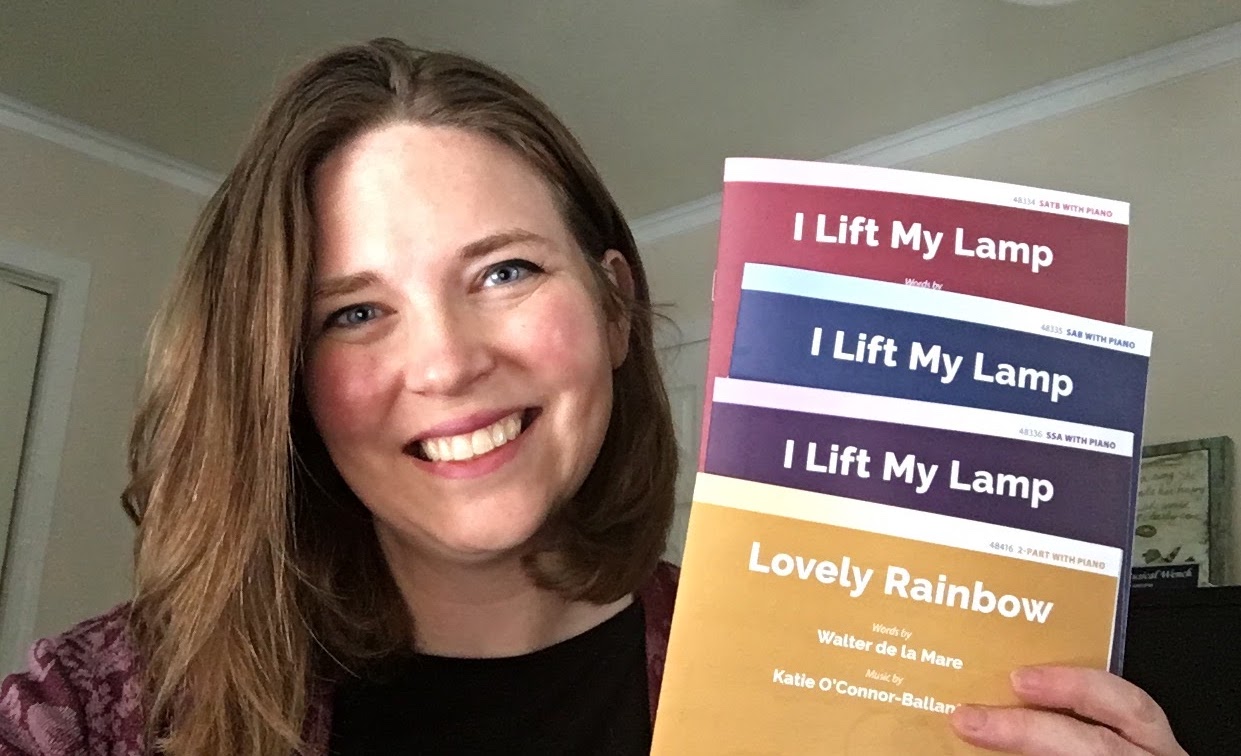
Katie O'Connor-Ballantyne is the composer of I Lift My Lamp . Over the course of her multifaceted educational career, Katie has taught musicians of every age and stage, from elementary to adult. Katie is an active guest conductor, adjudicator, choral clinician, and presenter at music education conferences and festivals.
What inspired you to write I Lift My Lamp?
When I was in middle school, my family took a trip to visit the Statue of Liberty and Ellis Island. It was deeply moving to visit both places, knowing that both sides of my family had entered the United States through Ellis Island, and would have been greeted by the sight of the "lady of the harbor" as they approached America's shores for the first time. My immigrant ancestors were working-class Irish and German people. Three generations after their arrival, I think it would amaze them to know that their great-great-granddaughter has been college-educated and works as a musician for a living! For my family, coming to America was an act of profound hope for a better future. Today, as we confront the topic of modern-day immigration and asylum-seeking, my hope is that we can continue to extend the same opportunity and grace to those who come to our borders today in search of a better tomorrow.
What teaching suggestions do you have to share for I Lift My Lamp?
Consider partnering with a local historian or social studies educator to work on collecting family histories. In doing so, remember that not all students are descended from immigrants: for instance, some students may be descended from Native Americans or enslaved people. Others may come from adoptive or foster families and have few details on their biological families. It may be worthwhile to consult with parents and caregivers to see if this may bring up sensitive issues for performers. Another potential point of discussion might be the "dream of America" expressed in the original poem: In what ways has our country lived up to this ideal? In what ways has it fallen short? What role does each of us play in realizing that dream?
What message do you have for singers learning this piece?
I invite you to think deeply about the text of the poem, and about how you will bring across its meaning in your voice and on your face as you sing. In the chorus, what do you think the repetition of the text "I lift my lamp" means? I'd also invite you to learn more about Emma Lazarus and the rich history of this poem, and its intimate connection to the Statue of Liberty.
See & Hear Now
