Behind the Scenes: The Recording Session
March 26, 2026|
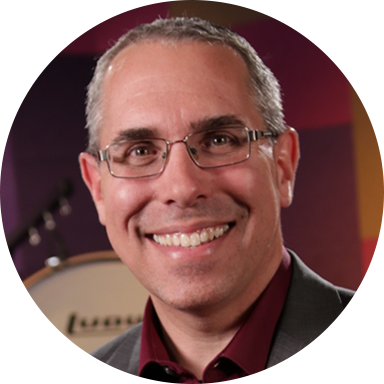
Chris M. Bernotas

When I was a director, I always wondered where these magical publisher recordings came from. They were so well-performed and impressive. To give you some context, I was completely all-in with my teaching career. I loved every aspect of the job: starting students with their first sounds, hearing them mature as their skills improved, and ultimately sharing in energizing, high-level performances. I studied my scores, listened to recordings of all kinds of ensembles and pieces, and simply became immersed in the world of music.
The delivery of publisher recordings was a bit of an early Christmas present for me and something I looked forward to (and continue to look forward to) each year. In fact, the recordings would accompany me on our family trip down the shore (it is a Jersey thing) each summer. My wife happily held the printed catalog in her lap with a pen ready to circle titles of anything that caught my ear, warranting further investigation. It brings back many fond memories of those road trips and the musical connection. But where DID those recordings come from?
From the Other Side of the Catalog
Fast forward. Here I am, now being the person who produces our recordings for Alfred Band, Belwin Band, Highland/Etling Orchestra, and Belwin Orchestra. Most of the year is spent working collaboratively with our composers, helping to shape their works for our catalogs. This includes offering compositional suggestions, editing, and working with our production team to bring each piece to the incredibly high publication standards we have. It is engaging and intensive work, but well worth the effort. What happens when a piece is considered final? It waits for the recording session to bring it to life.
Why These Recordings Matter More Than Ever
As we have discussed on our podcast, Take Notes with Balmages and Bernotas, the role of publisher recordings has changed considerably over the years. They are no longer just a snapshot of a piece for a director to briefly check out to see if they might purchase it for their ensemble. Now, these recordings are listened to over and over and over again and in many different ways. They are on our alfred.com website, our retail partner websites, YouTube, and MakeMusic Cloud. Directors refer to them as exemplary examples of characteristic tone and performances that show deep musicality and emotion. These recordings play a role in the classroom and for students at home. Ensuring they are of the highest possible quality is a responsibility I take seriously, as do the performers in the ensembles.
When the Music Comes to Life
The recording sessions are when all of those dots and lines jump off the page and come to real life! They are no longer electronic visions of what music could be. There is immediate emotion, and it is a thrill from the very first note to the very last note of our sessions. When the sessions end, there is a strong sense of relief because the stress of getting everything recorded in the time allotted has been overcome; happiness because the reflection of all the amazing music we just made together is realized; but also a sense of sadness because it is over.
The Work Behind the Scenes
I mentioned stress. Yes, there are so many logistics that go into planning a recording session. There is the first step, which is finalizing all of the music you are about to record. It takes a fantastic production team to help accomplish this, and I am lucky to be part of one of the best teams. It takes sorting the music and stuffing folders. Yes, I stuff folders! I check every folder multiple times to make sure every page of every piece is there and that all of the music is in order. Sounds fancy, right? It is. I spread out all of the folders on my breakfast bar and dining room table and go through them one by one. Then I check them again. The last thing you want when you are about to record a piece is for someone to say, “I am missing the second page.” I also plan the logistics of the folks who are going with me to the recording sessions. Making sure everyone’s travel is set, hotels are planned, and everyone knows the game plan. I meet with our recording engineers to ensure they have all of the information they need. Then, there is the planning of the actual time recording.
Months before the recording sessions take place, I start thinking through the order in which we are going to record the pieces. Do you record all of the higher-level pieces first? Last? Do you sprinkle them in between easier pieces? All of this requires forethought and strategy. Remember, we have real, live humans performing this music. They get tired and can lose focus and also want to have some fun! So, I need to think through this experience from their perspective. I want the players to enjoy the sessions so they are excited to come back and perform for us again in the future. I review the order of the music with everyone involved in the session so they know the challenges to come and the flow of time. We record for 50 minutes of each hour and then have a 10-minute break. So, time management is crucial. I have to make sure that we don’t lag, and if we do, strategize where we can catch up! Everyone is so professional and incredibly dedicated to the best performance possible, and I appreciate their attention and dedication for the benefit of directors and even more so for students. They know that young musicians are going to be listening to these pieces, and one of them may very well be the spark that ignites their passion for music.
World-Class Talent, Every Take
We recorded our band music in the Washington D.C. area with local musicians, including members of our top military bands, both active and retired, as well as freelance artists. They are incredibly talented, and their immediate musical response when sight-reading is truly astonishing. While I did step onto the podium, I spent most of the time overseeing the session. Producing a session involves closely examining the scores and listening carefully to catch any mistakes or issues that need attention. This could be a tempo change, a wrong note, a stylistic detail, or anything else. It also includes managing the schedule to stay on track without creating unnecessary stress.
Our orchestra recordings took place in Indianapolis, featuring members of the Indianapolis Symphony Orchestra, Indianapolis Chamber Orchestra, and other exceptional freelance musicians. Many of these talented players have been part of our recording sessions for years and eagerly look forward to bringing new music to life. I can always see the joy on their faces and hear it in their performances. I admire all of our musicians not only for their talent but also for their genuine passion to make the recordings the best they can be. It’s an honor to work with our teams in D.C. and Indianapolis.
Once again, I want to express my appreciation for the team here at Alfred. Notably, Al Nigro, our associate editor, ensures all the music is correct and handles many other tasks as well. It’s an essential role, and nobody does it better! Adrian Alvarez, our Director of Engraving, guarantees that our engraved music is of the highest quality and standard. We never want a performer to raise a question during a recording or rehearsal because of confusing notation. Many people work behind the scenes, all sharing the same goal and passion: to share the joy of making music. I hope you enjoy all our new and old releases and find exactly what you’re looking for by browsing at alfred.com.